
Respect the ocean. Understand the rip.
Rip currents are the number one hazard facing beachgoers globally. They aren't mysterious undertows pulling you underwater - they are simply powerful rivers of water moving back out to sea. Learning how to read them saves lives.
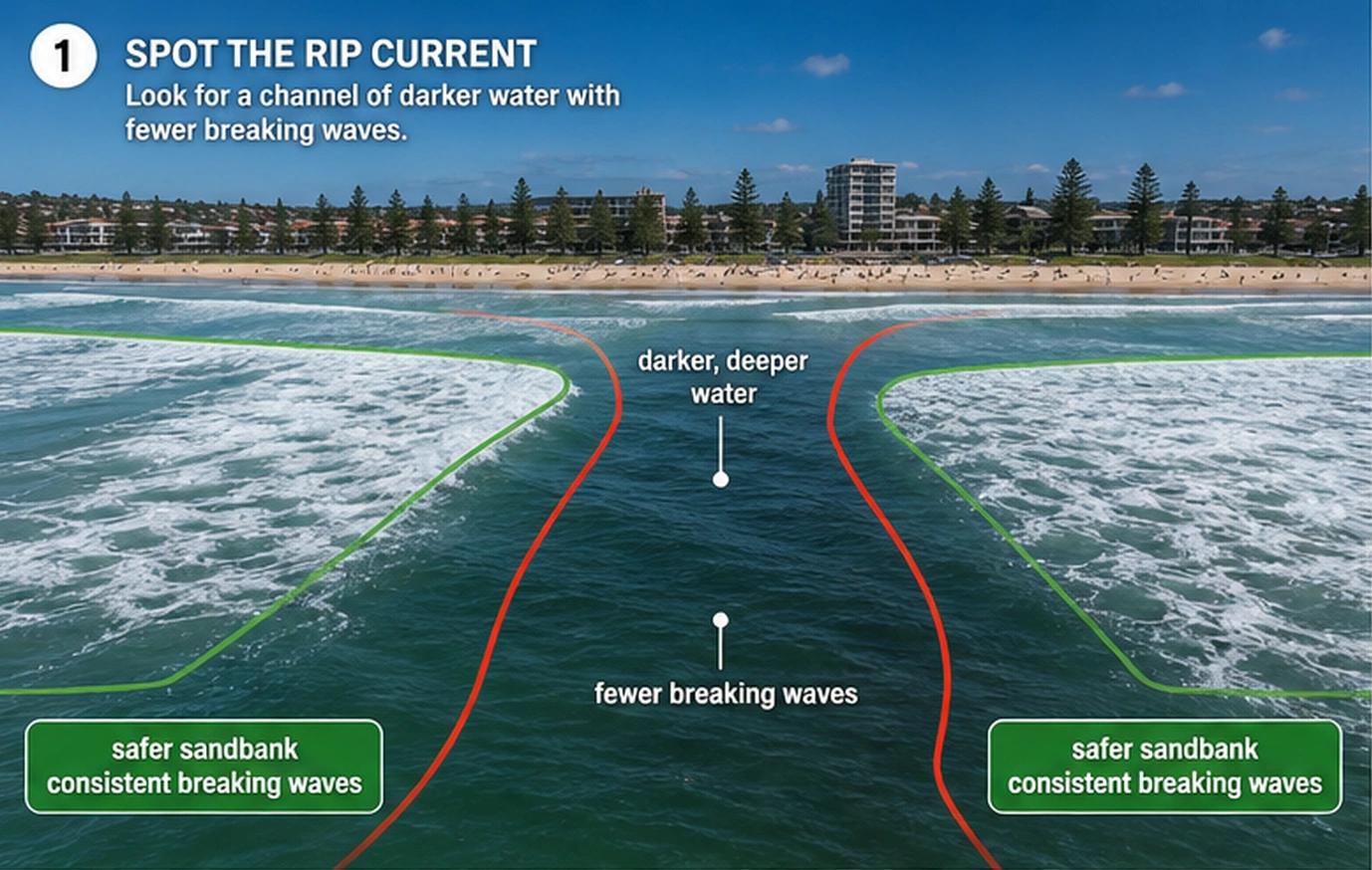
What exactly is a rip current?
When waves crash onto a shore, massive volumes of water accumulate on the beach face. That water needs an escape route back to deep ocean levels. It funnels down the path of least resistance - typically a breach in the sandbar network - forming a high-velocity channel heading straight out to sea.
The feeder channels
Water sitting flush along the shore baseline runs laterally across the shallows, searching for a deeper exit break.
The neck channel
The intense structural core. A narrow, highly accelerated pipeline of water tearing straight out through the breaking waves.
The dispersal head
The exit point out past the wave break zone where the current spreads out, loses momentum, and completely dissolves.
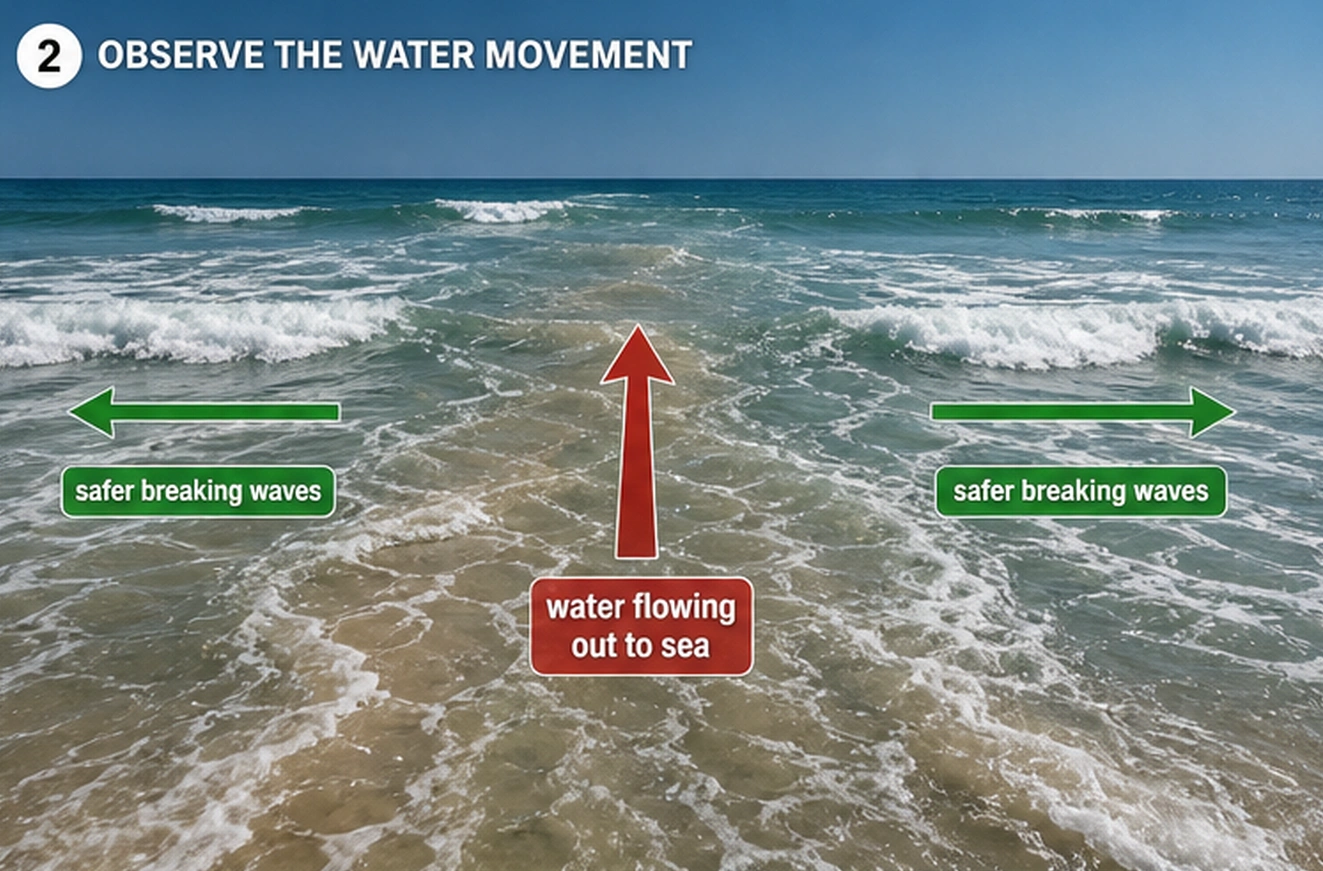
How to spot a rip like a professional lifesaver
Deceptively, rips look like the calmest place to swim because incoming waves don't break over deep water channels. Do not let flat spaces fool you. Stand on high ground and cross-examine the ocean for these direct clues.
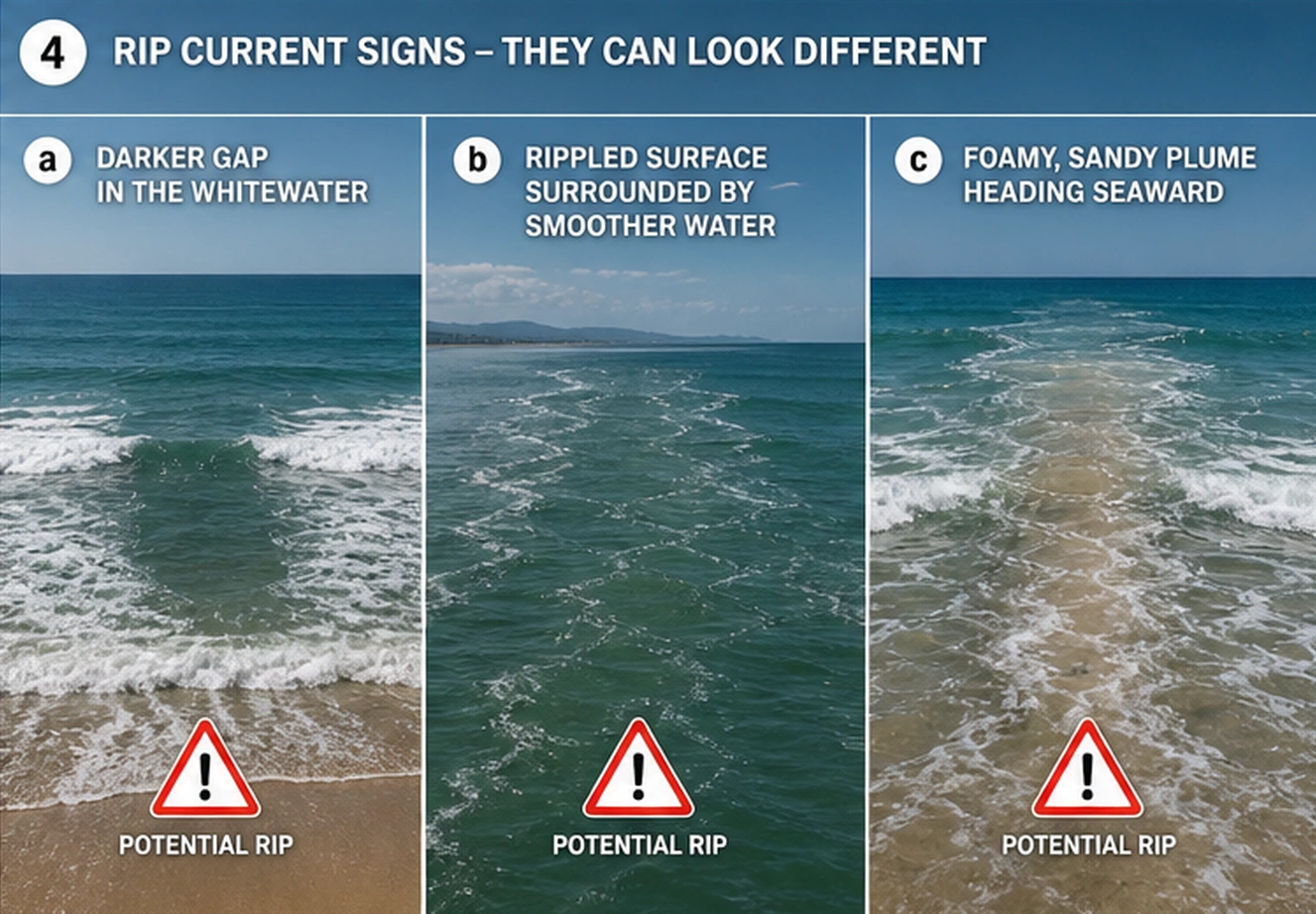
The dark, smooth gap
Look for a prominent break in the rolling white lines of surf foam. Deep channels reflect darker shades of green or blue and stay flat while either side breaks heavily.
Drifting foam tracks
Watch for patches of sea foam, seaweed chunks, or churned-up sediment moving in a steady line directly out away from the beach, going completely against the wave push.
The 10-Minute Assessment Rule
Never rush straight from the car straight into the surf. Take 5 to 10 minutes to sit back on an elevated sand dune or observation deck to watch the water. Currents change in intensity rapidly and pulse based on tide stages - what looks safe now could change within moments.
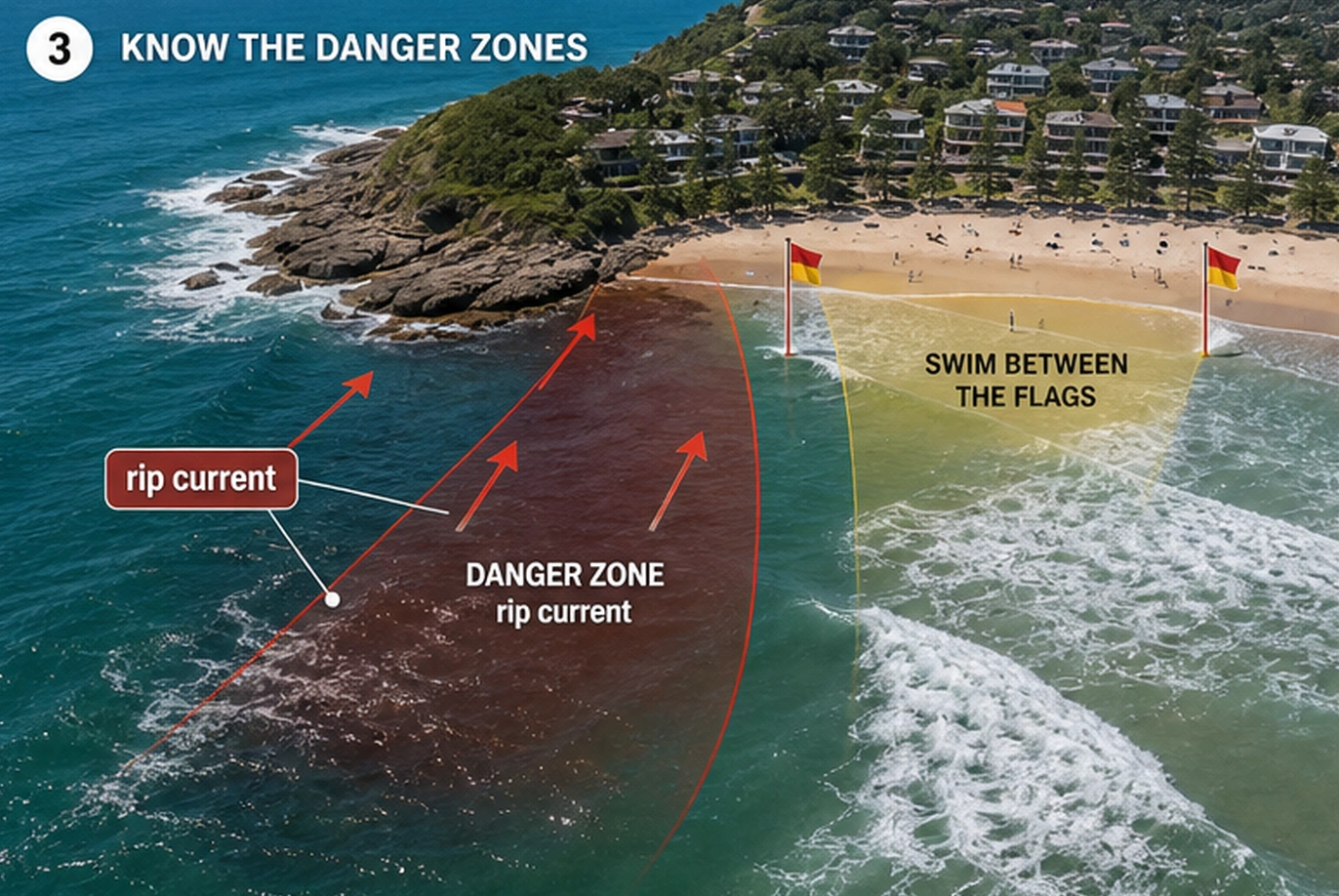
Structural hazards: headland rips
Rips do not just appear dynamically on sandy floor banks. They are also permanently anchored along solid rock structures. Water pushed shoreward deflects off headlands, piers, or rock groynes and runs clean out along the hard wall edge.
Why they are exceptionally dangerous: Boundary rips are permanent fixtures. Because the rock formations do not shift like shallow sandbars do, these channels are incredibly deep and hold intense structural velocity all year round.
Rule of thumb: Avoid swimming near rocky headlands, cliffs, breakwalls, or concrete pier columns. The visual indicators might be muted, but the outbound current flow alongside the wall is often incredibly intense.
Summary
Take your time. Take a look.
Spend 5-10 minutes watching the water.
The ocean isn't going anywhere. It's better to be safe than sorry.
If you are swimming alone or there are no life guards, swim elsewhere. It's not worth the risk.
Crisis action playbook
Panic is the absolute catalyst for drowning. Rips will not drag you under the water; they will only float you out away from land.
Retaining your composure keeps you alive.

If trapped in a rip yourself
Do not battle the flow: Do not try to swim straight back to shore. You will experience complete muscle exhaustion. Even master class professionals cannot beat a rip neck.
Float to live: Flip onto your back, fill your lungs to maximize buoyancy, and relax. Let the flow take you. It will terminate and lose energy shortly behind the wave break.
Swim sideways: Once the outbound velocity eases up, navigate parallel to the shore line layout to slide away from the narrow channel width, then catch incoming breaks inward.
Raise and signal: If unable to swim clear, stay floating, raise a rigid arm high to indicate distress, and call out loudly toward shore guards.
If you witness someone caught
Do not charge in alone: Many tragic events occur when bystanders sprint directly into a rip channel without tracking devices or boards, becoming a second rescue priority.
Engage emergency response: Immediately call out for professional beach lifeguards or call 000 right away to organise rescue teams.
Communicate: Shout instructions clearly to the swimmer. Remind them to roll onto their back, float calmly, and direct them to navigate parallel to the coast line.
Project flotation: Throw items with high buoyancy out toward them if they are close enough - a surfboard, bodyboard, or an icebox lid to keep them resting.
RipScan – Disclaimer
RipScan is provided for educational and general information purposes only. It is not a substitute for professional lifeguard supervision, official beach safety advice, or your own judgement in and around the water.
While we aim to improve awareness of rip currents and beach hazards, no system can guarantee 100% accuracy. RipScan may fail to detect dangerous conditions, may misidentify hazards, or may be affected by factors such as lighting, weather, camera angle, crowding, or device limitations. You should never rely solely on this app to decide whether it is safe to enter the water.
Always follow local warnings, signs and instructions from lifeguards and authorities, and always exercise caution and personal responsibility when near the ocean. If you are unsure, do not enter the water and seek advice from qualified personnel.
To the maximum extent permitted by law, RipScan and its creators make no representations or warranties about the accuracy, completeness, reliability, suitability, or availability of any information or output provided by the app, and accept no liability for any loss, injury, or damage arising from its use or from reliance on it. Your use of RipScan is entirely at your own risk.
RipScan should be used in conjunction with official beach safety resources and common sense, and not as an emergency, rescue, or life-saving service. In an emergency, always contact local emergency services immediately.